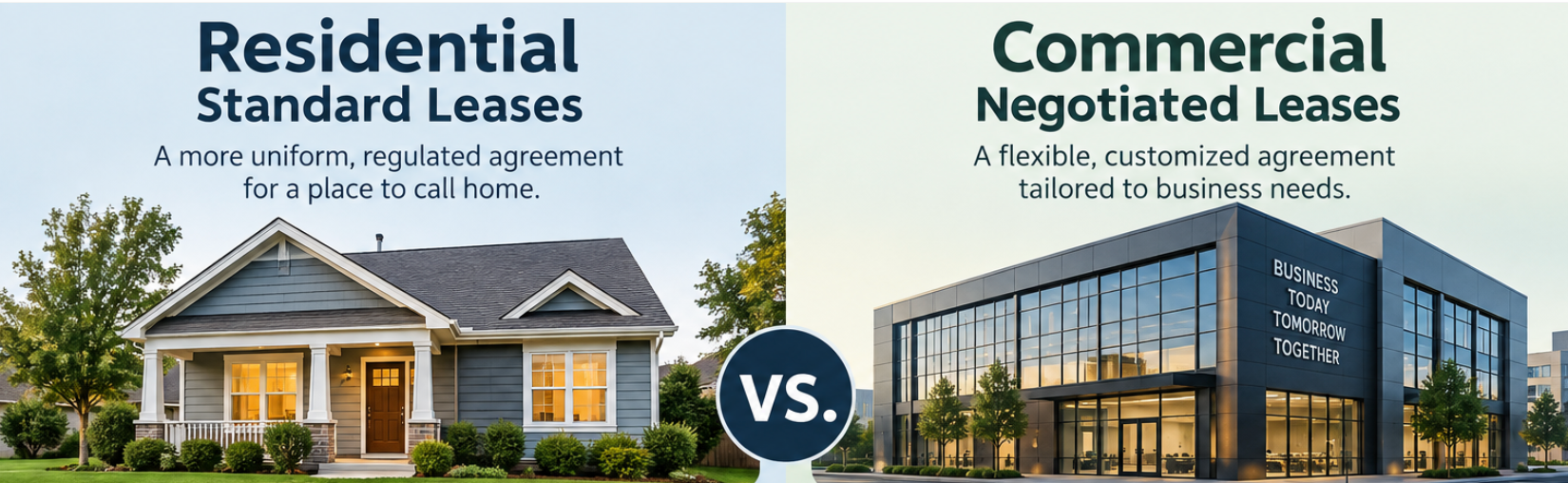
The right commercial property manager can help protect your investment, maintain tenant relationships, control operating costs, and improve the day-to-day performance of your building.
However, choosing a property manager based only on a sales presentation or a low management fee can create problems later. A polished pitch does not always reflect how a company handles tenant issues, financial reporting, maintenance emergencies, or lease decisions.
Before signing a commercial property management agreement, you need to understand how the company actually operates. Asking the right questions can help you compare providers, identify potential issues, and choose a partner that matches your property’s needs.
This checklist covers the most important questions to ask a commercial property manager before you sign.
Questions About Commercial Property Management Experience
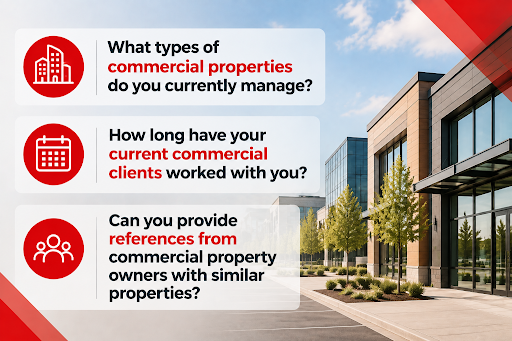
Managing an industrial building, office property, or retail plaza requires different knowledge, systems, and tenant relationships.
A company that mainly manages residential properties may not have the same processes needed for commercial leases, operating cost recoveries, tenant improvements, or complex maintenance requirements.
What types of commercial properties do you currently manage?
Ask for specific details:
- How many commercial properties do you manage?
- What asset classes do you specialize in?
- How many properties are similar to mine?
- What geographic areas do you currently serve?
A property manager experienced with downtown Toronto office buildings may not understand suburban retail properties, industrial facilities, or mixed-use buildings in the GTA.
Local market knowledge matters because tenant expectations, leasing conditions, vendors, and maintenance requirements can vary significantly between locations.
How long have your current commercial clients worked with you?
A property management company’s client retention can provide insight into the quality of its service.
Ask:
- What is your average client relationship length?
- How many business owners have been your clients for longer than five years?
- Why do clients typically leave?
A company should be comfortable explaining both its successes and how it handles challenges.
Can you provide references from commercial property owners with similar properties?
References are one of the most valuable parts of the evaluation process.
Ask for references from owners who have properties similar to yours, not only general testimonials.
When speaking with references, ask:
- Are financial reports delivered on time?
- Are maintenance issues handled quickly?
- Does the manager communicate proactively?
- Are there unexpected fees or charges?
- Would you hire them again?
Questions About Financial Reporting and Accounting
Owners need accurate information about revenue, expenses, tenant payments, and property performance. Without reliable reporting, it becomes difficult to make decisions about refinancing, renovations, or future investments.
Could you provide me with an example of a monthly owner report?
What owners get each month should be explained by a qualified commercial property manager.
A useful owner report may include:
- Income and expense summary
- Budget versus actual performance
- Rent roll updates
- Tenant payment status
- Maintenance expenses
- Vendor invoices
- Outstanding issues
- Property performance overview
Owners can determine whether the property is performing as intended with the use of clear reports.
A consistent commercial property operating budget can also help owners track performance and identify changes before they become larger financial issues.
How is your management fee calculated?
Do not only ask for the percentage fee. Understand what the fee includes.
Ask:
- Is the fee based on gross billed rent or collected rent?
- Are there minimum monthly fees?
- Are administrative services included?
- Are tenant issues, inspections, and reporting included?
- Are there additional charges?
A lower management fee does not always mean lower overall costs. Additional administrative fees, vendor markups, or separate service charges can significantly affect the total cost.
Learn more about typical pricing considerations in our guide on commercial property management costs in the GTA.
Do you add markups to vendor invoices?
Some property managers apply administrative fees or markups to third-party services.
Ask:
- Are maintenance invoices passed through at cost?
- Are vendor relationships disclosed?
- Are there preferred suppliers?
- Do you receive any commissions or rebates?
Transparency is important because maintenance costs directly affect your property’s profitability.
Questions About Tenant Management and Leasing
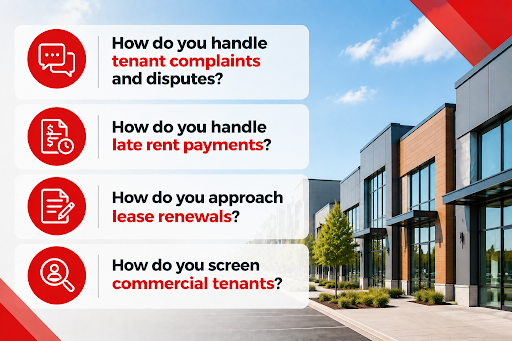
Tenant relationships directly affect commercial property performance. A strong manager should have clear processes for attracting tenants, handling issues, and maintaining occupancy.
How do you handle tenant complaints and disputes?
Ask the manager to explain their process.
For example:
- Who responds to tenant requests?
- How quickly are issues acknowledged?
- How are disputes documented?
- When does the owner become involved?
Commercial tenants expect professional communication. Delayed responses can damage relationships and create avoidable problems.
How do you handle late rent payments?
Commercial rent collection requires more than sending reminders.
Ask:
- What happens after the first missed payment?
- How quickly do you contact the tenant?
- What escalation process do you follow?
- When do you recommend legal action?
A clear process helps protect cash flow while maintaining professional tenant relationships.
For more information, see our guide on commercial rent arrears and the Ontario landlord escalation process.
How do you approach lease renewals?
Lease renewals should be planned well in advance rather than addressed when the expiry date is approaching.
Ask:
- How early do you begin renewal discussions?
- Who negotiates lease terms?
- How do you evaluate market rent?
- Do you track upcoming expiries?
A proactive manager should identify upcoming lease risks before they affect occupancy and revenue.
How do you screen commercial tenants?
Tenant quality affects long-term property performance.
Ask what information they review before recommending approval, such as:
- Business financial statements
- Credit history
- Business experience
- References
- Security deposits
- Personal guarantees where appropriate
A strong tenant screening process can reduce future collection problems.
You can also review our article on how to vet commercial tenant financials before signing a lease.
Questions About Maintenance and Property Operations
Maintenance is one of the areas where property owners often see the biggest difference between average and professional management.
A good manager should not only respond to problems. They should help prevent expensive issues through inspections, planning, and vendor management.
What is your emergency response process?
Ask:
- Is emergency support available after business hours?
- Who receives emergency calls?
- How quickly are critical issues addressed?
- Are owners notified immediately?
Examples of commercial emergencies include:
- Major water leaks
- HVAC failures
- Electrical problems
- Security issues
- Building access problems
A defined response process protects both tenants and the property. Opt for emergency property management services.
How do you select and manage contractors?
Ask:
- Do you have established vendor relationships?
- Are vendors licensed and insured?
- Do you obtain multiple quotes for larger projects?
- How do you monitor work quality?
Reliable contractors can reduce downtime and prevent repeated repairs.
How often do you inspect properties?
Regular inspections help identify problems before they become expensive repairs.
Ask:
- How frequently are inspections completed?
- Are inspection reports provided?
- Are photos included?
- Are recommendations prioritized by urgency?
Regular property inspections can help owners understand building condition and plan future maintenance.
Questions About the Management Agreement
Before signing, carefully review the management agreement. The contract should clearly explain responsibilities, fees, and termination conditions.
What is the termination notice period?
Ask:
- How much notice is required?
- Is there an early termination fee?
- Are there conditions for ending the agreement?
- How are records transferred?
Understanding exit terms before signing prevents surprises later.
If you are changing providers, our guide on switching commercial property managers without losing tenants explains what owners should consider during the transition.
Who owns the property records and data?
Clarify what happens if the relationship ends.
Ask about:
- Financial records
- Tenant files
- Lease documents
- Maintenance history
- Vendor information
- Security deposits
A professional manager should have a clear process for transferring information.
Red Flags When Interviewing a Commercial Property Manager
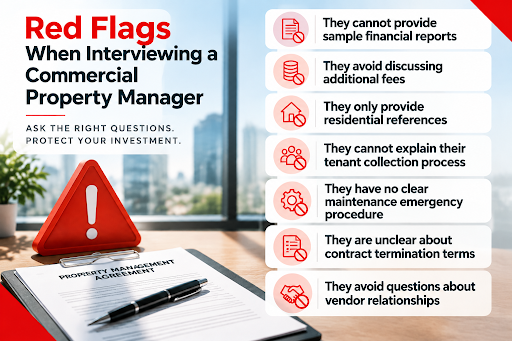
During the selection process, watch for warning signs such as:
The way a company handles questions during the interview often reflects how it will communicate after signing.
How Many Commercial Property Managers Should You Interview?
For most owners, speaking with three property management companies provides enough comparison without making the process unnecessarily long.
During each meeting, compare:
- Experience with similar properties
- Reporting quality
- Communication style
- Fee structure
- Maintenance approach
- Contract terms
The goal is not simply finding the lowest price. It is finding a company that can protect your property and support your investment goals.
Choose a Commercial Property Manager Based on Evidence, Not Promises
A commercial property management relationship can last for years, so the selection process deserves careful attention.
The right questions help you understand how a company manages financial reporting, tenant relationships, maintenance and day-to-day operations before you commit.
At Manage Your Property, we help commercial property owners across the GTA manage their buildings with structured reporting, proactive maintenance, and professional tenant support.
Whether you are hiring your first property manager or considering a transition from your current provider, understanding what to ask is the first step toward protecting your investment.
Frequently Asked Questions
- What should I ask a commercial property manager before hiring them?
Ask about their experience, reporting systems, fees, tenant management process, maintenance procedures, references, and contract terms. The goal is to understand how they operate before signing an agreement.
- How many commercial properties should a property manager handle?
There is no fixed number that applies to every company. The important factors are whether they have enough resources, staff, and systems to properly support each property.
- Should I choose the cheapest commercial property manager?
The lowest fee is not always the lowest total cost. Consider what services are included, how reporting is handled and whether additional charges apply.
- What documents should a commercial property manager provide monthly?
Owners should expect clear financial reporting, income and expense summaries, rent information, maintenance updates, and details about important property issues.
- How do I know if I need to switch commercial property managers?
Common signs include poor communication, delayed reporting, unresolved maintenance issues, tenant complaints, or unclear financial information. Owners considering a change should review the transition process carefully before making a decision.