Clinics are some of the most loyal tenants in commercial real estate, as long as the building works for them. Dentists, physicians, physiotherapists and other practitioners invest heavily in their build-outs and equipment, and their patients learn the address. Moving is expensive and disruptive.
That loyalty disappears quickly when the HVAC fails during appointments, parking fills up, accessible entrances stop working, or a renewal offer arrives too late. This guide covers why practitioner tenants stay or leave and the retention plan that keeps them, from the first day of the lease to the renewal. It builds on how we run buildings through our medical and professional building management service.
Why Practitioner Tenants Stay and Why They Leave
Understanding both sides helps you focus your effort where it matters.
What Keeps Them
- Patient Familiarity: Patients know where to go and how to get there.
- Cost of Rebuilding: Operatories, exam rooms and specialized systems are expensive to replace.
- Hard-to-Move Equipment: Imaging and lab equipment can be costly to relocate.
- Good Neighbours: Complementary tenants that refer patients.
What Pushes Them Out
- System Failures During Clinic Hours: Cancelled appointments cost the practice money and goodwill.
- Poor Accessibility: Broken power doors or blocked ramps frustrate patients.
- Parking Problems: Patients who can’t park eventually choose another clinic.
- Slow Response: Requests that sit for days.
- A Weak Renewal Offer: Terms that ignore the tenant’s investment in the space.
- A Competing Building: Newer space with a strong improvement package.
Losing a tenant is expensive in any building. Our article on the real cost of losing a tenant shows how vacancy, turnover and re-leasing costs add up; for a clinic suite with a specialized build-out, the gap is often wider.
Keep the Building Working During Clinic Hours
Reliability is the foundation of retention. Book preventive HVAC and plumbing work on a tighter schedule than a standard office, and schedule it outside patient hours whenever possible. Give tenants advance notice of any planned shutdown. Set clear response times for urgent issues and keep them. Our property maintenance services and emergency property management services are set up for exactly this kind of building.
Make the Patient Experience Easy
Practitioners judge the building by what their patients say about it. Pay attention to:
- Parking: Designated patient spaces and accessible spots close to the entrance.
- Accessible Entrances: Working power doors, clear ramps and reliable elevators.
- Wayfinding: A clear directory and suite signage.
- Common Areas: Clean, well-lit lobbies, corridors and washrooms.
Patient complaints often drive a clinic’s decision to relocate long before the tenant tells you.

Start Renewal Conversations Early
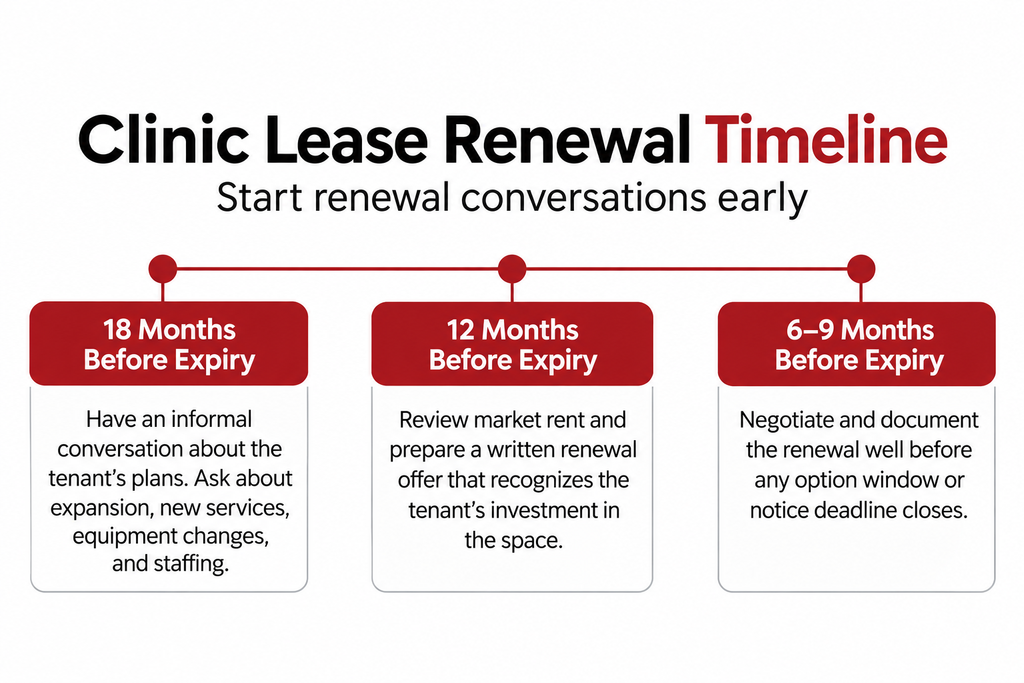
Clinics plan moves well in advance. If your renewal offer arrives after they’ve toured other space, you’re negotiating from behind. Use this timeline:
18 Months Before Expiry
Have an informal conversation about the tenant’s plans. Ask about expansion, new services, equipment changes or staffing. This is when you learn whether they need more space, less space or different space.
12 Months Before Expiry
Review market rent and prepare a written renewal offer that recognizes the tenant’s investment in the space. Our guide to GTA commercial rent trends in 2026 and our property evaluations service can help you set the right number.
6 to 9 Months Before Expiry
Negotiate and document the renewal well before any option window or notice deadline closes.
Renewal Incentives That Work for Clinics
Clinics tend to value incentives that support their practice more than a short rent-free period. Options to consider include:
- Refresh Allowance: For reception areas, finishes or flooring.
- Phased Rent Steps: Gradual increases instead of a single jump.
- Expansion Rights: First rights on adjacent suites as they become available.
- Signage Improvements: Better directory or exterior visibility.
- After-Hours HVAC Review: A fair, clear rate for extended hours.
The right structure depends on the tenant, the lease and your lender, so review the numbers carefully before you offer anything.
Build a Tenant Mix That Sends Patients to Each Other
A pharmacy, lab, imaging centre, physiotherapy clinic and specialists can create a building patients rely on for more than one visit. Tenants who refer to each other tend to renew together. Protect that mix with sensible exclusive-use clauses so you don’t place two competing practices side by side.
When a Clinic Tenant Is Struggling
Even good practices can hit a rough patch. Watch for early signs such as late payments or reduced hours, and have the conversation early. If the practice is fundamentally sound, a documented payment arrangement can be better for both sides than enforcement. If it isn’t, follow your lease and the escalation ladder for commercial rent arrears in Ontario with legal advice. If a lease expires without a renewal and the tenant stays, our guide to holdover tenants in commercial space explains your options.
Keep Your Practitioner Tenants for the Long Term
Clinic tenants stay when the building works for them and renewal planning starts early. Our medical and professional building management is built around both, alongside our office building property management, property evaluations and wider commercial property management services.
We work with medical and professional building owners across Toronto, North York, Scarborough, Etobicoke, Markham, Richmond Hill, Vaughan, Mississauga, Brampton and Oakville. Let’s Talk about your building.
Frequently Asked Questions
1. How far in advance should I start lease renewal talks with a clinic tenant?
Start informal conversations about 18 months before expiry and have a written renewal offer ready about 12 months out. Clinics plan moves well in advance, so a late offer often arrives after they have already toured other space.
2. Why do medical tenants renew more often than other tenants?
Their build-outs and equipment are expensive to move, and patients know the location. That advantage only holds if the building’s systems, access and parking keep working for them.
3. What renewal incentives work best for medical tenants?
Refresh allowances for reception and finishes, phased rent increases, expansion rights and signage improvements tend to matter more to clinics than a short rent-free period.
4. How does tenant mix affect retention in a medical building?
Complementary tenants such as a pharmacy, lab or imaging centre refer patients to each other. When the mix works, each tenant has another reason to stay.
5. What should I do if a clinic tenant starts paying late?
Talk to them early. If the practice is sound and the problem is temporary, a documented payment arrangement is often better than enforcement. If not, follow the escalation steps in your lease with legal advice.