A mixed-use building combines two or more uses in one property, most often retail or office space at street level with residential units above. In Toronto, the classic example is the main-street building: a café, pharmacy or dental office on the ground floor and two or three apartments upstairs.
For investors, mixed-use buildings offer two income streams and some of the best-located properties in the city. They also bring two sets of rules, more complex financing and more management. This guide explains the main types of mixed-use buildings, how they earn money, the pros and cons, and what to check before you buy. If you already own one, our mixed-use building property management in Toronto page explains how we run both sides of the building.
What Counts as a Mixed-Use Building

Mixed-use properties come in a few common forms.
Vertical Mixed-Use
Commercial space at grade with residential units above. This is the most common type in Toronto and across older downtowns in the GTA.
Horizontal Mixed-Use
Separate commercial and residential buildings on the same site or within one development, such as a plaza with townhouses behind it.
Mixed-Use Condominiums
Commercial and residential units owned separately within one condominium corporation. Investors may own a single retail unit or a residential unit in the same building.
Live-Work Units
Units designed so the occupant can live and run a business in the same space, often with a storefront at the front and living space behind or above.
How Mixed-Use Buildings Make Money
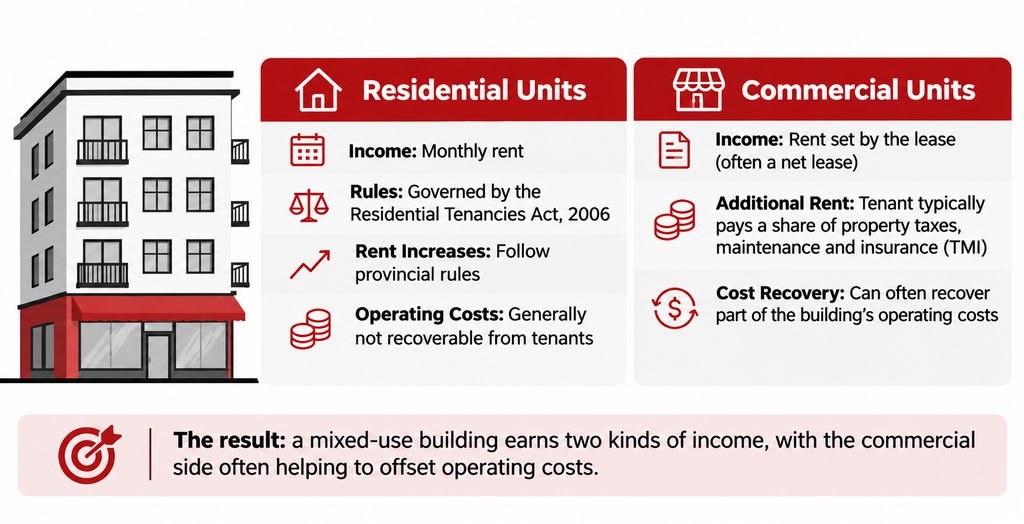
A mixed-use building earns two kinds of income.
Residential rent is paid monthly under tenancy agreements governed by the Residential Tenancies Act, 2006. Residential tenants pay the rent in their agreement, and any increase follows provincial rules.
Commercial rent is set by the lease. Many commercial leases in Ontario are net leases, where the tenant pays base rent plus a share of property taxes, maintenance and insurance as additional rent. That means the commercial side can often recover part of the building’s operating costs, while the residential side generally can’t. Our guide to how TMI works for Ontario commercial landlords explains how those recoveries are calculated.
When comparing returns across properties, investors often look at both cap rate and return on investment. Our article on cap rate vs ROI explains the difference.
Pros of Owning a Mixed-Use Building
- Diversified Income: Residential rent can steady the building when a storefront is vacant, and commercial rent adds a second stream.
- Longer Commercial Leases: Commercial tenants often sign multi-year leases, which can make income more predictable.
- Cost Recovery on the Commercial Side: Net leases can recover a share of operating costs from commercial tenants.
- Strong Locations: Main-street buildings with foot traffic tend to hold their appeal.
- Residential Demand: Apartments in walkable neighbourhoods often lease quickly.
- Owner-Occupier Option: Some owners run their own business from the storefront.
Cons and Risks to Weigh
- Two Legal Regimes: Residential units follow the Residential Tenancies Act, while commercial units follow their leases and the Commercial Tenancies Act. Our guide to the Commercial Tenancies Act vs the Residential Tenancies Act covers the 12 differences that matter most.
- Residential Rent Increase Rules: Many residential units are subject to the provincial rent increase guideline, while units first occupied for residential purposes after November 15, 2018 are generally exempt. Increases still require at least 90 days’ written notice. Our article on properties exempt from rent control explains how this works.
- More Complex Financing: Lenders look closely at how much of the building and its income is commercial, which can affect terms. See how commercial mortgages differ from residential.
- Insurance and Tax Differences: Coverage needs and HST treatment differ between the residential and commercial components. Review landlord insurance in Ontario and speak with your accountant.
- Conflicts Between Uses: Restaurant odours, late hours, deliveries and noise can lead to complaints from upstairs tenants.
- Longer Commercial Vacancies: An empty storefront can take longer to lease than an apartment.

Who Mixed-Use Buildings Suit Best
Mixed-use buildings tend to suit investors who are comfortable managing two types of tenants, owner-operators who want to occupy the storefront, and buyers looking for main-street locations with long-term appeal. They’re less suited to first-time investors who want a simple, hands-off residential property. If you’re comparing options, our article on managing a multiplex property covers the residential-only alternative.
What to Check Before Buying a Mixed-Use Building

Due diligence on a mixed-use building covers more ground than a residential purchase. Before you firm up an offer, review:
- Zoning: Confirm the current commercial use is permitted and what other uses are allowed.
- Every Lease and Tenancy Agreement: Commercial terms, residential rents and whether each unit is subject to the rent increase guideline.
- Utility Metering: Whether units are separately metered or sub-metered.
- Fire Separation: Between commercial and residential uses, especially where there’s a restaurant.
- Building Condition: Roof, HVAC, storefront and plumbing.
- Commercial Tenant Strength: Vet the commercial tenant’s financials the same way you would a new tenant.
- Valuation of Each Component: See how commercial property is valued in Canada.
- Insurance Quotes: For both the residential and commercial components.
- HST Position: Confirm the treatment with your accountant.
A pre-purchase review through our property inspection services can flag condition issues before closing.
Managing a Mixed-Use Building After You Buy
Once you own the building, keep the two sides separate where the rules require it and connected where it makes sense. That means separate rent rolls and reporting through accounting and bookkeeping, a documented method for splitting shared costs such as heating, water and the roof, the right notice rules for each tenant type, and one manager who understands both. Our residential property management covers the apartments, and our mixed-use building property management brings both sides together.
Thinking About a Mixed-Use Building?
Whether you’re buying your first main-street building or already own one, we can help you run it properly from day one. Our mixed-use building property management covers both sides of the building, backed by our commercial property management services, residential property management and property management for real estate investors.
We work with mixed-use owners in Toronto, North York, East York, York, Scarborough, Etobicoke, Markham, Oakville, Burlington, Oshawa, Whitby and Newmarket. Let’s Talk about your building.
Frequently Asked Questions
1. What is a mixed-use building?
A mixed-use building combines two or more uses in one property, most often retail or office space at street level with residential units above. In Toronto, the classic example is a main-street storefront with apartments upstairs.
2. Are mixed-use buildings a good investment in Ontario?
They can be, because they combine residential and commercial income and often sit in strong main-street locations. They also bring two sets of rules, more complex financing and more management, so they suit investors comfortable with both tenant types.
3. Do residential tenancy rules apply in a mixed-use building?
Residential units are covered by the Residential Tenancies Act, 2006, while commercial units are governed by their leases and the Commercial Tenancies Act. Both apply in the same building, depending on the unit.
4. Is it harder to get a mortgage on a mixed-use building?
Often it is more involved, because lenders look at how much of the building and its income is commercial. Terms can differ from a residential mortgage, so speak to a lender or broker early.
5. Can I live in the apartment above my store?
Yes, if zoning and the building’s layout allow it. Many owner-operators run the storefront and live upstairs or rent the remaining units.